Research
The Avocado Export Market: Why Global Demand Matters
How changing consumption patterns, expanding international markets, and global trade are shaping the avocado industry.
October 26, 2026 · 5 min read · AVO Oro Verde
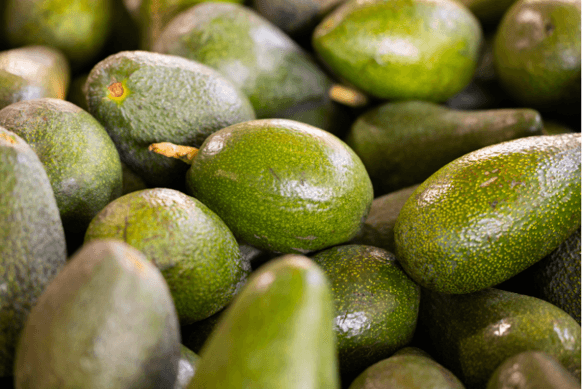
Global demand for avocados has grown significantly over the past two decades, reshaping agricultural production, export infrastructure, and international trade. Understanding what drives this demand, where growth is emerging, and the challenges facing producers offers valuable insight into the evolving avocado market.
A Dietary Shift That Kept Compounding
The clearest illustration is the United States, the world’s largest avocado market. USDA’s Economic Research Service reported that per capita use had tripled since the early 2000s, reaching just over 7 pounds a person by 2018. A University of Florida review of USDA data puts the projected 2023 figure at about 9.2 pounds, up from about 1.5 pounds in 1998. USDA analysts link the rise to wider use in foods like guacamole and sandwiches and to greater awareness of healthy fats, while the Hass Avocado Board has promoted the fruit for two decades.
Two caveats matter. Availability is a supply measure, calculated as net production plus imports minus cold storage stocks, so it shows what entered the market rather than what households actually ate. The multiple is also flattered by a low starting point. ERS further notes that nearly all growth in per capita use since the mid 2000s was met by imports, which ties US demand closely to a small number of foreign suppliers.
Growth Isn’t Limited to One Market
North America accounted for about 35 percent of the global avocado market by value in 2025, but it is not where the fastest growth is expected. The same forecaster projects Asia-Pacific to grow at 9.4 percent a year through 2031, the fastest of any region, against 8.33 percent for the global market. That is faster than average, but not close to double.
These regional figures are model outputs from a commercial research firm, not official statistics, and publishers define the market differently. Official trade data show growth is uneven: the FAO recorded that global avocado exports fell 3.1 percent in 2022 after a steep drop in supply. Expanding consumption across regions shows avocados becoming part of increasingly diverse food markets, creating new opportunities and challenges for global producers and exporters.
What’s Driving Global Market Value
Commercial research firms estimate the global avocado market at roughly $18.5 billion in 2026, with a similar $18.54 billion estimate from The Business Research Company. Forecast growth rates range from about 6.8 percent a year to 8.33 percent a year, depending on the publisher, the market definition, and the forecast period. Value forecasts also blend volume, price, and product mix. One publisher projects global volume growth of only 3.42 percent a year through 2034, well below the value figures, so price and mix do much of the work.
Fresh fruit still dominates trade. In 2023, Mexico’s avocado exports were 96 percent fresh, 3 percent guacamole, and 1 percent pulp, according to USDA. Processed formats such as guacamole and oil extend avocados’ reach, but they remain a small share of cross-border trade.
Why Export Markets Matter
Growing consumer demand also influences international trade, shaping how avocados move from producing regions to markets around the world. Mexico’s avocado exports reached a record $3.787 billion in 2024, up 20 percent, and a record $3.97 billion in 2025, about 40 percent of global export value. Record years are best cases by definition. In 2023, USDA reported that export volume rose 17 percent while export value fell 12 percent because of peso appreciation. In 2024, USDA estimated that volume fell 9 percent even as value hit a record, citing logistics costs and harvest variability.
The trade is also highly concentrated. The US takes nearly 90 percent of Mexico’s export volume, and Mexico supplied about 88 percent of US avocado imports in 2024. Michoacán and Jalisco produce roughly 85 percent of Mexico’s avocados and are the only states authorised to export to the US. That scale of trade signals strong buyer demand, but it also shows how much rests on one corridor. USDA’s 2026 export forecast of 1.31 million tons is a projection, not a result.
Challenges Facing Global Avocado Trade
None of this means the growth curve is certain to continue smoothly. Export volumes can swing meaningfully year to year with weather, logistics costs, and security-related disruptions. Global exports rose 10.6 percent in 2023, then about 2 percent in 2024 and about 13 percent in 2025, according to the OECD and FAO.
Security incidents have repeatedly interrupted the flow of fruit. US inspections in Michoacán were suspended in 2022 and 2024, and again in August 2026, when the US government halted activities over a security threat before fully resuming them about a week later. During one 2024 disruption, US carton prices rose roughly 40 percent within days.
Environmental pressures add a longer-term constraint. A peer-reviewed review in Ambio describes how avocado expansion in Michoacán has driven deforestation and affected biodiversity, soil, and hydrological systems. A 2026 Mongabay report on a recent study found that soil moisture in highly productive avocado areas declined between 2001 and 2018, raising the prospect of water stress. Demand growth and supply reliability are two different factors, both of which influence the stability and long-term development of the global avocado trade.
Further reading: Avocado Farmland: What to Know covers regional concentration and operating risks in more detail.
Looking Ahead: The Future of Global Avocado Demand
The expansion of global avocado consumption reflects changing dietary preferences, broader international distribution, and continued development of agricultural export markets.
While demand has grown significantly over the past two decades, the industry’s future will also depend on production capacity, climate conditions, water availability, logistics, and access to international markets.
Understanding these factors provides a clearer perspective on how the global avocado industry continues to evolve and the opportunities and challenges shaping its future.
Further reading: How the orchards are run describes AVO Oro Verde’s approach to water, soil, and communities.
This article is for general information only. It is not investment, legal, or tax advice and is not an offer to sell securities. Past performance is not a reliable indicator of future results. Figures and forecasts come from third party sources, are estimates, and may be revised. Agricultural investments carry risk, including loss of capital.
Questions about avocado markets or our work? Contact the AVO Oro Verde team.