Research
Avocado Farmland as a Real Asset: Assessing the “Green Gold” Thesis
How demand, supply concentration, water, security, and governance shape avocado farmland as a real asset, and where the comparison with gold holds.
November 24, 2026 · 4 min read · AVO Oro Verde
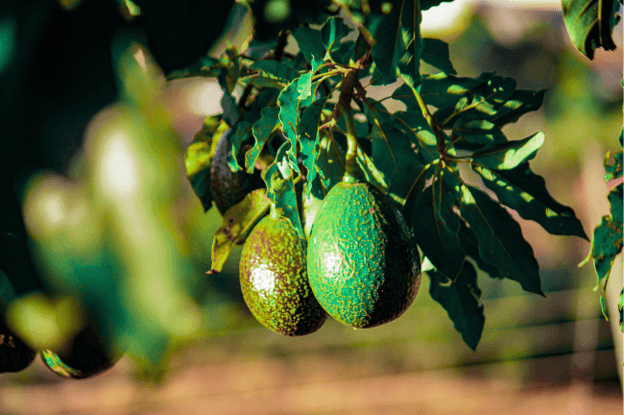
In Michoacán, the Mexican state that produces most of the country’s avocados, the crop is known locally as “green gold”, a name that captures both the wealth it has generated and the operating complexity behind it. The nickname raises a practical question for allocators: does avocado farmland merit a place alongside gold, farmland generally and other real assets, and under what conditions?
The Investment Case: Demand and Scarcity
Productive avocado orchards combine features that are hard to find together. Like gold, they are a tangible asset with strong demand behind them. Unlike gold, that demand comes from something people consume and repurchase continuously, so the asset also generates income. Forecasts point to continued growth: Grand View Research projects the global market rising from $19.5 billion in 2026 to $26.0 billion by 2030, with Asia-Pacific the fastest-growing region. The largest market is already established at scale: US per capita consumption has risen from about 1.5 pounds in 1998/99 to about 9.5 pounds in 2024/25. Add a geographically narrow supply of land well suited to the crop, and the result is scarcity value layered on a productive, income-generating asset.
Supply Concentration and Diversification
Gold’s value does not depend on any single mine or country, and avocado supply is more concentrated. Mexico accounts for around 28 percent of global production, and within Mexico, Michoacán and Jalisco together represent roughly 85 percent of the national crop and are the principal exporting states. In our view, this makes geographic diversification across regions and origins a central consideration in how avocado farmland is held, rather than a feature the asset provides on its own.
Water: Resource Stewardship and Long-Term Productivity
Water is the principal structural variable for orchard returns. Estimates of the crop’s water footprint vary: one widely cited industry figure is around 800 litres per kilogram of fruit, while a peer-reviewed 2024 study of specific Michoacán municipalities found combined rainfed and irrigated footprints of roughly 1,300–1,400 cubic metres per tonne. A 2026 study also found soil moisture across Michoacán’s avocado belt declining steadily since 2001, with an estimated 11 percent of the state’s population affected by the resulting water stress. For long-duration capital, water management is therefore as important as land quality, and the orchards best placed to perform are those with reliable water access and efficient irrigation.
Security: Operating Environment and Supply-Chain Integrity
Michoacán’s operating environment is a real consideration for anyone sourcing from the region. Cartels have extorted avocado producers for over a decade, with protection payments reportedly ranging from roughly $135 to $500 per hectare monthly in some areas. The supply chain has also been disrupted by security incidents. In 2024, US inspectors were assaulted, and imports from the state were suspended for over a week, briefly lifting US prices around 40 percent. In August 2026, the US again suspended government operations in Michoacán, including avocado inspections, over a threat to US interests, before partially resuming inspections after commitments from the Mexican government and reinforced security. US authorities have also stepped up enforcement. Treasury sanctioned Los Viagras in 2025, citing its extortion of avocado and citrus growers, and the State Department designated the group a foreign terrorist organization in July 2026. In our view, this attention is likely to continue shaping the operating conditions for the sector.
Governance and Industry Response
The industry is responding on several fronts, and these efforts matter to the thesis. They include deforestation-free certification programs, new labor certification requirements tied to Michoacán’s 2026 “Plan for Peace and Justice,” and accelerating adoption of efficient irrigation. Each targets one of the risks above, and the extent to which they take hold will help determine how the asset class develops.
Conclusion: Understanding Avocado Farmland as a Real Asset
Avocado farmland combines tangible land ownership with agricultural production linked to an established global food market. Its characteristics distinguish it from traditional commodities such as gold, while introducing a different set of operational, environmental and geographic considerations.
The long-term fundamentals are influenced by more than consumer demand. Land suitability, water availability, orchard productivity, security, governance and access to export markets all contribute to the quality and resilience of an agricultural asset.
In our view, the “green gold” comparison is most useful when understood in this context. Avocado farmland is not simply a scarce commodity, but a productive agricultural asset whose long-term value depends on responsible land management, operational discipline and the sustainability of the resources supporting production.
This material is provided for informational purposes only and does not constitute investment advice or an offer of securities. Third-party forecasts and industry estimates are subject to differing methodologies and are not assurances of future results.